
Select your vehicle
A/C Flow Restrictors
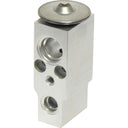

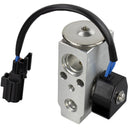

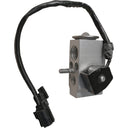
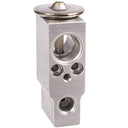

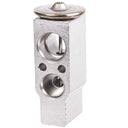


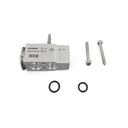


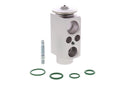


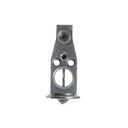
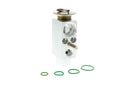


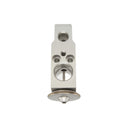


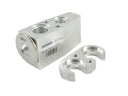


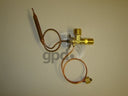

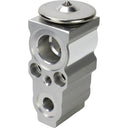
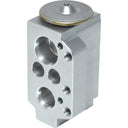

A/C flow restrictors - expansion valves, orifice tubes, and related components - control refrigerant flow between the high and low pressure sides of your A/C system. The expansion valve meters refrigerant precisely based on evaporator temperature and load; the orifice tube uses a fixed orifice to do the same job in simpler, fixed-displacement systems. Both wear out, clog with debris, or fail outright - typically showing up as warm air, icing on the evaporator, or wide swings in system pressure. Most orifice tubes should be inspected or replaced every 50,000–100,000 miles or any time the compressor is serviced; expansion valves don't have a set interval but commonly fail between 100,000–150,000 miles. When buying, confirm whether your system uses an orifice tube (common on GM, Ford, Chrysler platforms) or a thermostatic expansion valve (TXV), and always match refrigerant type (R-134a vs. R-1234yf). OEM-spec valves with brass bodies and stainless sensing bulbs outlast cheap zinc alternatives.
Signs you need replacement
- A/C blows warm air despite the compressor running. A stuck-closed expansion valve or clogged orifice tube starves the evaporator of refrigerant, causing little to no cooling even with correct refrigerant charge.
- Evaporator or suction line icing up. A stuck-open expansion valve floods the evaporator with refrigerant, causing freeze-over that blocks airflow entirely - you may notice a brief blast of cold air followed by nothing.
- Abnormal high/low side pressure readings. Low suction pressure paired with normal or high head pressure points directly to a restricted expansion valve or orifice tube during manifold gauge diagnosis.
- Debris or discoloration on the removed orifice tube. A brown or black screen on the inlet side indicates compressor wear particles in the system - replace the orifice tube and flush the system before recharging.
- A/C performance drops significantly in high heat or stop-and-go traffic. A failing thermostatic expansion valve often loses the ability to regulate flow under heavy load, causing inconsistent cooling that worsens when the vehicle is idling.
Frequently asked questions
- Should I replace the orifice tube every time I replace the A/C compressor? Yes - it's standard practice. The orifice tube catches debris shed by a failing compressor, so it's almost certainly contaminated. At under $10–$20 for most applications, replacing it during a compressor job prevents a repeat failure and protects the new compressor from recirculated debris.
- Is an OEM expansion valve worth the premium over aftermarket? For most daily drivers, a quality aftermarket TXV from brands like Four Seasons, UAC, or Spectra Premium performs comparably at 30–50% less cost. OEM is worth prioritizing on newer vehicles with R-1234yf systems, luxury platforms with integrated thermal management, or any application where calibration tolerances are tight per the service manual.
- What does it cost to replace an expansion valve, and what else should I replace at the same time? Parts typically run $20–$120 depending on vehicle and valve type; labor adds $100–$250 at a shop, making total cost $150–$400 for most jobs. Always replace the receiver-drier or accumulator at the same time - both are moisture-absorbing components that should be renewed any time the system is opened.