
Select your vehicle
Sensors
| Image | Part | Brand | Part number | Position | Availability | |
|---|---|---|---|---|---|---|

|
Oxygen Sensor Actual OE Oxygen Sensor |

Bosch
|
17098 | — | $120.88 | In stock
|

|
Oxygen Sensor Actual OE Oxygen Sensor |
Bosch
|
17102 | — | $129.29 | In stock
|

|
Air / Fuel Ratio Sensor OE Style |

Denso
|
234-9036 | — | $137.70 | In stock
|

|
Air / Fuel Ratio Sensor Direct Fit 5-Wire A/F Sensor |

NTK
|
24372 | — | $140.59 | In stock
|
|
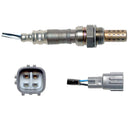
Oxygen Sensor OE Style |
Denso
|
234-4260 | — | $61.57 | In stock
|

|
Oxygen Sensor Actual OE Oxygen Sensor |
Bosch
|
17016 | — | $126.80 | In stock
|

|
Oxygen Sensor OE Style |
Denso
|
234-4930 | — | $92.04 | In stock
|

|
Oxygen Sensor Actual OE Oxygen Sensor |
Bosch
|
13477 | — | $67.84 | In stock
|
|
Oxygen Sensor Actual OE Oxygen Sensor |
Bosch
|
16139 | — | $98.53 | In stock
|

|
Oxygen Sensor Bosch Validated Oxygen Sensor |
Bosch
|
18088 | — | $65.11 | In stock
|

|
Oxygen Sensor Actual OE Oxygen Sensor |
Bosch
|
17404 | — | $105.93 | In stock
|

|
Oxygen Sensor Actual OE Oxygen Sensor |
Bosch
|
16166 | — | $72.51 | In stock
|

|
Oxygen Sensor OE Style |
Denso
|
234-4926 | — | $83.03 | In stock
|

|
Mass Air Flow Sensor |

Hitachi
|
MAF0031 | — | $86.84 | In stock
|

|
Air / Fuel Ratio Sensor OE Style |
Denso
|
234-9112 | — | $243.60 | In stock
|

|
Air / Fuel Ratio Sensor OE Style |
Denso
|
234-9048 | — | $185.16 | In stock
|

|
Oxygen Sensor OE Style |
Denso
|
234-4305 | — | $153.48 | In stock
|
|
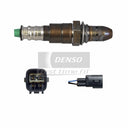
Air / Fuel Ratio Sensor OE Style |
Denso
|
234-9145 | — | $199.98 | In stock
|
|
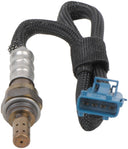
Oxygen Sensor Bosch Validated Oxygen Sensor |
Bosch
|
15379 | — | $150.94 | In stock
|
|
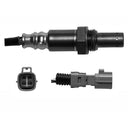
Oxygen Sensor OE Style |
Denso
|
234-4416 | — | $88.13 | In stock
|

|
Manifold Absolute Pressure Sensor |
Denso
|
198-2002 | — | $68.40 | In stock
|
|
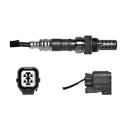
Oxygen Sensor OE Style |
Denso
|
234-4694 | — | $56.46 | In stock
|

|
Oxygen Sensor OE Style |
Denso
|
234-4064 | — | $62.20 | In stock
|
|
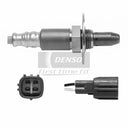
Air / Fuel Ratio Sensor OE Style |
Denso
|
234-9109 | — | $183.68 | In stock
|
|
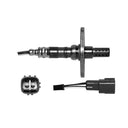
Oxygen Sensor OE Style |
Denso
|
234-4189 | — | $81.27 | In stock
|
|
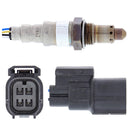
Oxygen Sensor Oxygen Sensor - OE Style |
Denso
|
234-8025 | — | $230.08 | In stock
|

|
Mass Air Flow Sensor Mass Air Flow Sensor (New) |
Bosch
|
0281006597 | — | $66.51 | In stock
|

|
Oxygen Sensor |

Walker
|
932-14063 | — | $54.77 | In stock
|

|
Oxygen Sensor Direct Fit Oxygen Sensor |
NTK
|
25732 | — | $103.02 | In stock
|
|
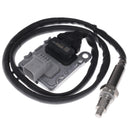
Nitrogen Oxide (NOx) Sensor |
Walker
|
1004-1068 | — | $340.14 | In stock
|

|
Air / Fuel Ratio Sensor Air / Fuel Ratio Sensor - OE Style |
Denso
|
234-9154 | — | $141.16 | In stock
|

|
Oxygen Sensor |
Walker
|
932-14064 | — | $54.67 | In stock
|

|
Oxygen Sensor |
Walker
|
932-14015 | — | $89.16 | In stock
|

|
Oxygen Sensor Bosch Validated Oxygen Sensor |
Bosch
|
18113 | — | $64.64 | In stock
|

|
Oxygen Sensor Direct Fit Oxygen Sensor |
NTK
|
24461 | — | $77.07 | In stock
|

|
Mass Air Flow Sensor Hella |

Hella
|
009142021 | — | $111.56 | In stock
|

|
Air / Fuel Ratio Sensor OE Style |
Denso
|
234-5062 | — | $157.67 | In stock
|

|
Oxygen Sensor Bosch Engineered Oxygen Sensor |
Bosch
|
18193 | — | $69.20 | In stock
|

|
Throttle Position Sensor |

Dorman
|
911-723 | — | $145.63 | In stock
|

|
Oxygen Sensor Actual OE Oxygen Sensor |
Bosch
|
16182 | — | $79.37 | In stock
|

|
Oxygen Sensor OE Base Sensor |
Walker
|
250-241278 | — | $101.81 | In stock
|

|
Nitrogen Oxide (NOx) Sensor |
Walker
|
1004-1025 | — | $352.12 | In stock
|

|
Air / Fuel Ratio Sensor Direct Fit 5-Wire A/F Sensor |
NTK
|
27027 | — | $132.94 | In stock
|
|
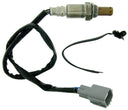
Air / Fuel Ratio Sensor Direct Fit 4-Wire A/F Sensor |
NTK
|
24662 | — | $97.31 | In stock
|

|
Ignition Knock (Detonation) Sensor |

Delphi
|
AS10285 | — | $55.87 | In stock
|

|
Mass Air Flow Sensor Mass Air Flow Sensor (New) |
Bosch
|
0280218381 | — | $108.79 | In stock
|

|
Oxygen Sensor Actual OE Oxygen Sensor |
Bosch
|
17100 | — | $107.79 | In stock
|

|
Oxygen Sensor Actual OE Oxygen Sensor |
Bosch
|
16193 | — | $67.41 | In stock
|
Emission control sensors are the nervous system of your engine's fuel and emissions management - they feed real-time data to the ECU so it can dial in fuel trim, ignition timing, and exhaust aftertreatment. When one fails, you'll typically see a check engine light, degraded fuel economy, or failed emissions testing before anything feels obviously wrong. Oxygen sensors and air/fuel ratio sensors are the most frequently replaced, usually every 60,000–100,000 miles on most gas engines, though contamination from oil burning or coolant leaks can cut that lifespan in half. MAF sensors, MAP sensors, and TPS units are less interval-driven and more failure-driven - clean them first before replacing. When buying, match the connector type, thread pitch, and sensor location (upstream vs. downstream, Bank 1 vs. Bank 2) exactly. OEM-spec sensors from Bosch, Denso, and NTK are worth the premium on daily drivers; budget aftermarket units have inconsistent longevity on turbocharged or high-mileage engines.
Signs you need replacement
- Check engine light with fuel trim codes (P0171, P0172, P013x, P0131–P0141 range): These codes point directly to oxygen, air/fuel ratio, or MAF sensor faults - don't clear and ignore them, as running rich or lean long-term damages catalytic converters.
- Fuel economy drops noticeably without a change in driving habits: A lazy or dead O2 sensor causes the ECU to run open-loop, defaulting to a rich fuel map. A contaminated MAF sensor causes similar over-fueling at highway speeds.
- Rough idle, hesitation, or surging under acceleration: A failing throttle position sensor or MAP sensor sends erratic load signals to the ECU, causing the engine to stumble when transitioning between throttle positions.
- Engine ping or knock under load, especially when towing or accelerating hard: A failed knock sensor disables the ECU's timing retard function, leaving the engine unprotected against detonation - replace it promptly to avoid internal engine damage.
- Failed emissions test with elevated HC, CO, or NOx readings: An upstream O2 sensor or air/fuel ratio sensor that's slow to respond will cause the catalytic converter to operate inefficiently, directly impacting tailpipe emissions output.
- DPF regeneration warning or excessive regen cycles on a diesel: A failing DPF pressure sensor or EGT sensor can misreport soot load or exhaust temperature, triggering unnecessary regens or preventing them from completing correctly.
Frequently asked questions
- How often should oxygen sensors be replaced, even without a fault code? Most manufacturers recommend replacing upstream O2 sensors every 60,000 miles on pre-1996 vehicles and every 100,000 miles on OBD-II vehicles with heated sensors. Downstream (post-cat) sensors tend to last longer but should be inspected when replacing a catalytic converter. High-mileage proactive replacement often prevents converter damage.
- Is OEM worth it over aftermarket for oxygen and MAF sensors? For O2 and air/fuel ratio sensors, OEM or OEM-equivalent brands (Bosch, Denso, NTK/NGK) consistently outperform cheap aftermarket options in response time and longevity - critical for accurate fuel trim. MAF sensors from Hitachi or Delphi are solid alternatives. Avoid unbranded sensors on vehicles with tight fuel trim tolerances, like direct-injection engines.
- Can I replace an emission sensor myself, and what else should I address at the same time? Most O2, MAF, TPS, and MAP sensors are DIY-friendly with basic hand tools; upstream O2 sensors on high-mileage vehicles may need penetrating oil and a proper O2 sensor socket. When replacing an O2 sensor, inspect the catalytic converter for damage. When replacing a MAF, check the intake boot for cracks that could cause the same symptoms to return.