
Select your vehicle
Hardware, Fasteners and Fittings


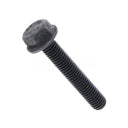





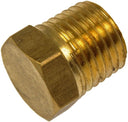


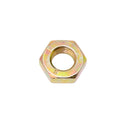
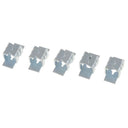


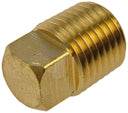

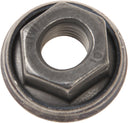

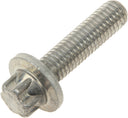


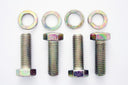





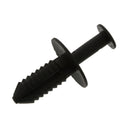


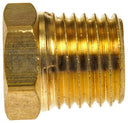

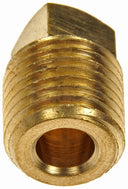
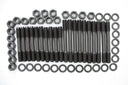
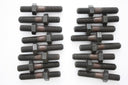
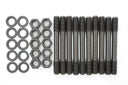
Hardware, fasteners, and fittings are the components that hold your engine, drivetrain, and chassis together - and they're often overlooked until something leaks, rattles, or seizes. This collection covers 46 parts across a wide range of types: studs (the most common failure point on exhaust manifolds and wheel hubs), pipe plugs and drain plugs for oil pans and coolant passages, nuts, bolts, bolt kits, washers, rivets, Woodruff keys for camshaft and crankshaft keyway alignment, push nuts, screws, and a multi-purpose vent hose. Most of these fail from corrosion, overtorquing, heat cycling, or simple wear over time. When buying, match thread pitch and diameter exactly - M10x1.25 and M10x1.5 are not interchangeable. For studs and drain plugs especially, OEM spec is worth the small premium to ensure correct torque ratings and thread engagement. Aftermarket bolt kits can offer good value for full replacements, but verify grade markings (Grade 8 or 10.9 metric minimum for structural applications).
Signs you need replacement
- Stripped or spinning drain plug: If the drain plug turns without tightening or oil weeps from the threads after a fresh oil change, the threads are compromised - replace the plug and inspect the pan threads before the next service.
- Broken or corroded exhaust manifold stud: A ticking or tapping noise from the engine that increases with RPM often points to a blown exhaust manifold gasket caused by a failed or snapped stud, common on high-heat applications like turbocharged engines.
- Vibration or wobble at a wheel hub: Loose or sheared wheel hub studs can cause a rhythmic vibration that worsens at speed - any stud that spins freely or shows thread damage needs immediate replacement before it becomes a safety issue.
- Oil or coolant seeping from a plugged port: Pipe plugs seal unused threaded ports in blocks, heads, and transmission cases; weeping fluid around a plug indicates a failed thread seal or cracked plug body that won't be fixed with sealant alone.
- Woodruff key shear or cam/crank timing slip: If your engine jumps timing without an obvious belt or chain failure, a sheared Woodruff key on the crankshaft or camshaft sprocket is a likely culprit - especially after an aggressive over-rev or prior improper torquing.
- Rattling trim or underbody panels: Missing or failed rivets and push nuts on splash shields, fender liners, and interior panels let components flex and vibrate - replace in sets rather than individually to avoid uneven retention.
Frequently asked questions
- How often should I replace drain plugs and pipe plugs? Drain plugs should be inspected at every oil change and replaced if threads show wear or the sealing washer is damaged - typically every 2–3 oil changes as a low-cost precaution. Pipe plugs don't have a set interval; replace them when removing for service or when any seepage is detected.
- Are aftermarket studs and bolts as reliable as OEM for critical applications like exhaust manifolds and wheel hubs? For wheel studs and lug hardware, stick to OEM or OEM-equivalent parts with confirmed SAE or metric grade ratings - these are safety-critical. Exhaust manifold studs benefit from stainless or high-temperature coated aftermarket options, which often outperform OEM in corrosion resistance on older vehicles in rust-prone climates.
- What's a reasonable cost range for this type of hardware, and what should I replace at the same time? Individual studs, plugs, and nuts typically run $2–$20 each; bolt kits range from $15–$60 depending on application. When replacing exhaust studs, always swap the manifold gasket. When changing a drain plug, replace the crush washer. For Woodruff keys, inspect the keyway in the shaft and sprocket for wallowing before reassembly.