
Select your vehicle
Flexplate


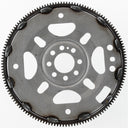


The flexplate connects your automatic transmission's torque converter to the engine's crankshaft, transferring rotational force while allowing for slight flex under load - hence the name. Unlike a manual transmission flywheel, a flexplate is a thin stamped-steel disc with a ring gear around the perimeter for the starter motor to engage. They rarely fail without warning, but cracks, a broken ring gear, or stripped starter teeth will sideline your vehicle fast. Most flexplates last the life of the engine, but high-mileage engines, hard launches, and improper torque converter installation accelerate wear. When buying, match the bolt pattern, tooth count (typically 164 or 168 teeth), and crankshaft pilot diameter to your specific engine and transmission pairing - these specs vary even within the same model year. OEM-spec aftermarket flexplates from brands like ATP, Pioneer, and Dorman are reliable alternatives to dealer parts at a fraction of the cost.
Signs you need replacement
- Loud metallic clunking or ringing at startup - A cracked flexplate flexes and vibrates as the starter engages, producing a distinct clunk or ring that disappears once the engine is running. This is one of the most common and recognizable symptoms.
- Grinding or rattling noise at idle that changes with engine RPM - A crack that's propagated near the torque converter mounting flange causes a rhythmic rattle that tracks with engine speed, often mistaken for a bad torque converter or loose heat shield.
- Engine cranks but won't start, or starter spins freely - Broken or severely worn ring gear teeth prevent the starter from catching, causing the starter motor to spin without engaging the engine.
- Vibration felt through the floorboard or drivetrain at low speeds - A warped or cracked flexplate introduces imbalance into the rotating assembly, producing a low-frequency vibration that's most noticeable at idle or during light acceleration.
- Visible cracks or stress fractures found during transmission removal - Flexplates are frequently inspected and replaced during major transmission service or torque converter replacement, since the labor cost to revisit the repair later far exceeds the cost of the part.
Frequently asked questions
- How often does a flexplate need to be replaced? There's no fixed interval - flexplates typically last 150,000–200,000+ miles under normal driving conditions. Replacement is usually triggered by a specific failure: cracking, ring gear damage, or warping. They're most commonly replaced during transmission removal, torque converter service, or rear main seal repair, since the flexplate is already accessible.
- Is an OEM flexplate worth the extra cost over aftermarket? For most applications, a quality aftermarket flexplate from ATP, Pioneer, or Dorman meets OEM specifications and performs identically in normal use. OEM may be preferable for high-torque or performance applications where factory metallurgy matters. Confirm the aftermarket part matches your crankshaft bolt pattern, tooth count, and torque converter pilot diameter before ordering.
- What else should I replace while the flexplate is out? Always replace the rear main seal if it shows any seepage - it's a $10–$30 part and the labor is already paid for. Inspect the torque converter pilot and mounting studs, and consider a new torque converter if it has high miles. Flexplates typically cost $30–$90 for aftermarket; OEM parts run $80–$200 depending on application.