
Select your vehicle
Service Kits


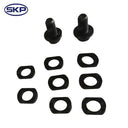



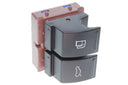


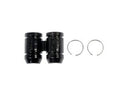


Body service kits bundle the small-but-critical hardware needed to restore proper function to exterior and interior body components without replacing entire assemblies. A broken center console hinge, a fuel door release cable that won't snap back, a sagging liftgate strap, or a rattling door striker are all common failures on vehicles with 60,000–120,000+ miles - the plastic clips, nylon bushings, and light-gauge cables in these mechanisms wear out long before the surrounding panels do. Each kit here is designed to address a specific failure point rather than patching it with generic hardware. When buying, confirm fitment by year, make, model, and trim - many of these kits are application-specific because clip geometry and cable attachment points vary even within the same model generation. OEM-spec kits typically match factory tolerances exactly; quality aftermarket kits (Dorman, Standard, etc.) are often a practical alternative at a lower price point, particularly for out-of-production vehicles where dealer parts are backordered or discontinued.
Signs you need replacement
- Center console lid flops open or won't stay at a set angle - the hinge pivot or friction bushing has worn through, a common failure on high-use center consoles after 5–8 years of daily opening and closing.
- Fuel door stays closed or springs open uncontrollably - the release cable has stretched, frayed at the end fitting, or the return spring inside the release mechanism has lost tension, leaving you pulling the interior release lever with no result.
- Door latch doesn't fully release or requires multiple pulls - the latch cable has developed kinks, the end clip has cracked, or the sheath has split and is binding the inner wire under load.
- Liftgate or hatch drops unexpectedly or won't stay propped - liftgate support straps stretch and lose elasticity over time, typically becoming noticeably weak after 80,000–100,000 miles or 8–10 years, especially in high-heat climates.
- Door striker produces a rattle or clunk at low speeds on rough pavement - the factory anti-rattle insert has worn down or fallen out, allowing metal-to-metal contact between the striker bolt and latch body.
- Sliding door handle feels loose or pulls away from the panel - the retaining clips or pivot pin inside the handle assembly have broken, which often happens after repeated high-force pulls or impact from loading cargo.
Frequently asked questions
- Are these kits vehicle-specific or universal fit? Almost all of these kits are application-specific - especially door latch cable, fuel door release, and sliding door handle kits, where clip geometry and cable length are unique to a model. Always match by year, make, model, and body style before ordering. A few anti-rattle kits fit across a range of striker bolt sizes and are noted where applicable.
- Are OEM kits worth the extra cost over aftermarket options like Dorman? For mechanisms under frequent stress - convertible top latches, sliding door handles - OEM plastic formulations and tolerances are more consistent. For lower-cycle components like door strikers or liftgate straps, quality aftermarket kits perform comparably at 30–60% less cost. Check the part description for material callouts if longevity is a priority.
- How difficult are these repairs, and what's a realistic cost if I do it myself? Most of these are 30–60 minute DIY jobs requiring basic hand tools - trim removal tools, a screwdriver set, and occasionally a pick for clip removal. Kit prices here typically run $15–$65. Dealer or shop labor to do the same job usually adds $50–$150 in labor cost, making most of these strong candidates for a Saturday morning repair.