
Select your vehicle
Lighting - Exterior
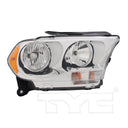

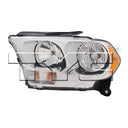


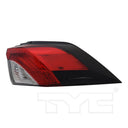

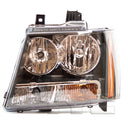

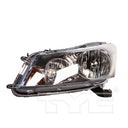
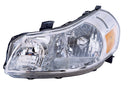

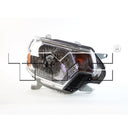
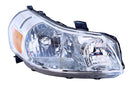

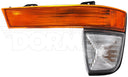


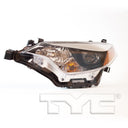


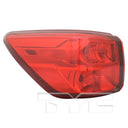


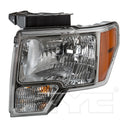
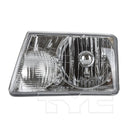


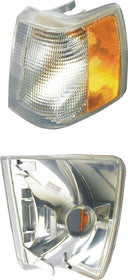


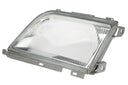

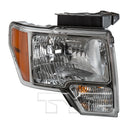
Exterior lighting covers every light source your vehicle shows to the world - from headlight assemblies and tail lights to fog lights, side markers, turn signals, and daytime running lights. Most assemblies don't have a fixed replacement interval; they're replaced when cracked, fogged, water-infiltrated, or after collision damage. Bulbs are the exception: halogen headlight bulbs typically last 500–1,000 hours, while HID bulbs run 2,000–3,000 hours before output degrades noticeably. When buying, confirm fitment by year, make, model, and trim - projector vs. reflector housings aren't interchangeable, and some vehicles require ADAS recalibration after headlight replacement. OEM assemblies preserve factory beam patterns and plug-and-play wiring, but quality aftermarket units from brands like TYC, Depo, and Dorman offer significant savings on non-safety-critical parts like markers and license plate lights. For HID systems, replace the ballast and igniter together if either fails - they degrade at similar rates.
Signs you need replacement
- Yellowed, hazy, or cracked headlight lenses - UV-oxidized polycarbonate can reduce light output by up to 80%, cutting your visible range significantly. A lens that can't be restored with a polishing kit needs a full housing replacement.
- Water or condensation pooling inside an assembly - minor fogging that clears with heat is normal, but standing water means the housing seal has failed and will cause bulb failure and socket corrosion if not replaced.
- Rapid turn signal flashing (hyperflashing) - if a turn signal blinks twice as fast as normal, one of the bulbs in that circuit has burned out or lost contact, including side marker or mirror repeater lamps on some vehicles.
- Dim, flickering, or completely dead tail or brake lights - often a failed bulb or corroded tail light circuit board, but a cracked housing that lets in moisture will take out replacements quickly if the housing isn't addressed first.
- HID headlight that won't strike or takes more than 5 seconds to reach full brightness - a slow or non-starting HID arc usually points to a failing ballast or igniter, not the bulb itself.
- Physical damage from a collision or road debris - even hairline cracks in a fog light or headlight housing allow water intrusion and compromise the beam pattern, which affects both visibility and oncoming traffic.
Frequently asked questions
- Do I need to recalibrate my headlights after replacing the assembly? Aim (vertical and horizontal beam angle) should always be checked after any headlight assembly swap. Vehicles with automatic headlight leveling sensors or front-facing ADAS cameras - common on 2015 and newer models - typically require a dealer or shop calibration. Basic halogen replacements on older vehicles can be aimed at home using a flat wall and a tape measure.
- Are aftermarket headlight and tail light assemblies as good as OEM? For tail lights, fog lights, and markers, quality aftermarket units from TYC or Depo are cost-effective and fit well. For headlights, OEM or OEM-equivalent assemblies are worth the premium - aftermarket projector housings sometimes produce uneven beam cutoffs that reduce visibility and can blind oncoming drivers. Always verify SAE/DOT compliance markings on any replacement assembly.
- What does a headlight or tail light assembly replacement cost, and is it a DIY job? Aftermarket headlight assemblies typically run $60–$250 per side; tail lights $40–$180. Labor at a shop adds $50–$150 depending on complexity. Most bolt-on assemblies are straightforward DIY - remove the trim panel or access from the engine bay, unplug the harness, swap, and align. Retractable headlight motors and HID ballast replacements are more involved but still manageable with basic tools.