
Select your vehicle
Control Modules


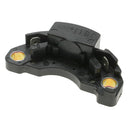


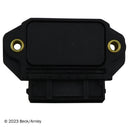


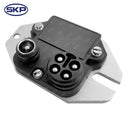


The ignition control module (ICM) is the brain behind your ignition system - it regulates the timing and firing of the ignition coil based on signals from the crankshaft and camshaft position sensors. When an ICM fails, it typically degrades rather than dying all at once, making diagnosis tricky. Most modules don't have a fixed replacement interval; they're replaced on failure, though heat cycles and vibration wear them down faster on high-mileage engines. The single wireless ignition module in this catalog applies to select keyless ignition systems and is vehicle-specific - confirm your year, make, model, and trim before ordering. For standard ICMs, OEM units offer the most reliable fit and calibration, particularly on import vehicles where aftermarket tolerances can affect timing accuracy. If you're buying aftermarket, stick with established brands like Standard Motor Products or Delphi, and verify the connector type matches your harness - pin count and orientation vary significantly across applications.
Signs you need replacement
- Engine cranks but won't start - A completely failed ICM cuts spark to the coil entirely. If you're getting fuel pressure and the battery is strong but there's no spark at the plugs, the module is a primary suspect.
- Engine stalls after reaching operating temperature - Heat-related ICM failure is one of its most common failure modes. The engine starts fine cold but dies after 10–20 minutes of driving, then restarts once it cools down.
- Random misfires or rough idle with no consistent pattern - An ICM losing the ability to regulate dwell time causes erratic spark timing, showing up as cylinder-specific or rolling misfires that don't point to a single coil or plug.
- Check engine light with codes P0300–P0308, P0350–P0362, or P1351 - Misfire and ignition coil control codes can stem from a failing module that's not delivering consistent trigger signals to the coil pack.
- No-start condition after the vehicle sat in extreme heat - Vehicles parked in direct sun can see ICM temps spike enough to cause thermal shutdown. If the car won't start after sitting on a hot day but starts fine in the morning, test the module under load.
Frequently asked questions
- How do I know if my ignition control module or the crankshaft position sensor is the problem? Both can cause a no-start or stalling condition with similar symptoms. Use a scan tool to check for crank sensor codes first - P0335 or P0336 point to the sensor, not the module. If there are no crank codes but you're still getting no spark with a known-good coil, the ICM becomes the primary suspect. A noid light or oscilloscope test on the trigger signal can confirm.
- Is an OEM ignition control module worth the price premium over aftermarket? On most domestic applications - particularly older GM, Ford, and Chrysler platforms - quality aftermarket units from Standard Motor Products or Motorcraft perform reliably and cost 40–60% less than OEM. On import vehicles like Toyota, Honda, or BMW, OEM or OEM-equivalent units are strongly recommended; aftermarket ICMs on these platforms have a higher rate of timing calibration issues and early failure.
- What's a typical ignition control module replacement cost, and should I replace anything else at the same time? Parts run $40–$250 depending on vehicle, with OEM units for European makes reaching $300+. DIY difficulty is moderate - most are accessible within 30–60 minutes, though some are mounted inside the distributor. When replacing the ICM, it's worth inspecting the ignition coil, crank position sensor, and the module's mounting surface for corrosion, since those components are often stressed by the same failure conditions.