
Select your vehicle
Control Modules


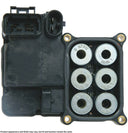


Brake control modules are the electronic brains behind your vehicle's safety systems - ABS control modules monitor wheel speed sensors and modulate hydraulic pressure to prevent lockup during hard braking, while parking brake control modules manage electric parking brake engagement and release. These units fail from water intrusion, voltage spikes, internal corrosion, or simply age; most last the life of the vehicle but commonly fail between 80,000–150,000 miles or after flood or electrical damage. Unlike wear items, modules don't get replaced on a schedule - they're replaced when they fail or when brake system codes can't be cleared any other way. When buying, OEM modules are the safest bet for EBCM-dependent systems because calibration and software compatibility matter; remanufactured units from reputable suppliers (Cardone, Standard Motor Products) are a proven cost-effective alternative, but always verify your vehicle's exact year, make, model, and ABS system type before ordering - many modules are VIN- or build-date-specific.
Signs you need replacement
- ABS warning light stays on after clearing codes. If C-codes related to the ABS control module return immediately or without a new triggering fault, the module itself has an internal failure and needs to be replaced, not just reset.
- ABS activates at normal stops on dry pavement. A failing ABS module can misread wheel speed sensor data and trigger unnecessary anti-lock cycling at low speeds, causing a pulsating pedal when none is warranted.
- Electric parking brake won't engage or release. On vehicles with an electronic parking brake, a fault in the parking brake control module can leave the brake stuck on or prevent it from setting, often accompanied by a dedicated EPB warning light.
- Traction control and stability control faults appear simultaneously. Because ABS, traction control, and electronic stability control share the same control module on most platforms, a module failure often trips all three warning lights at once.
- Trailer brake controller is unresponsive or throws a fault code. If your tow vehicle's trailer brake control module fails to communicate with a trailer's electric brakes or triggers a "no trailer detected" error with a known-good connection, the module is the likely culprit.
Frequently asked questions
- Does an ABS control module need to be programmed after replacement? It depends on the vehicle. Many late-model GM, Ford, and Chrysler platforms require the replacement module to be programmed to the VIN using a professional scan tool or dealer-level software. Some older or simpler systems are plug-and-play. Check your specific application before buying - a remanufactured module pre-programmed to your VIN can simplify the job significantly.
- Is a remanufactured ABS module as reliable as a new OEM unit? For most applications, yes - provided you're buying from a reputable remanufacturer like Cardone or ATE. These units are tested to OEM specs and often include a warranty. New OEM modules offer the highest confidence on newer vehicles or complex integrated brake/stability control systems, but the cost difference can be substantial, often $150–$400 more.
- How much does ABS control module replacement typically cost, and is it a DIY job? Parts run $75–$500 depending on vehicle and whether the unit is new or remanufactured. Labor adds $100–$300 at a shop, plus programming fees if required. Physically swapping the module is straightforward - usually one harness connector and a few bolts - but if your vehicle requires post-install programming, you'll need a capable scan tool or a shop visit to complete the job.