
Select your vehicle
Body Wiring Harness and Components


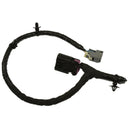


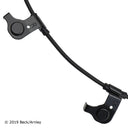

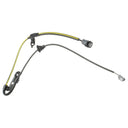
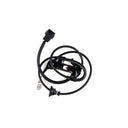
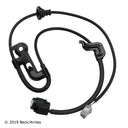
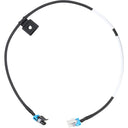
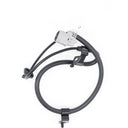
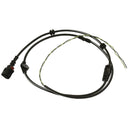
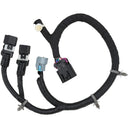


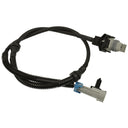
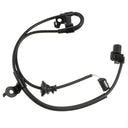


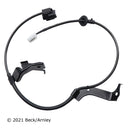

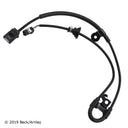

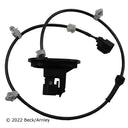


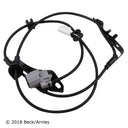


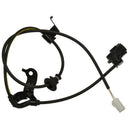


ABS wheel speed sensor wiring harnesses connect each wheel's speed sensor to the ABS control module, transmitting the real-time data your system needs to modulate brake pressure during hard stops. These harnesses run along suspension and axle components, making them vulnerable to chafing, heat damage, corrosion at the connector, and fatigue cracks from constant wheel movement - especially on high-mileage vehicles or those driven in salt-heavy climates. Most fail gradually rather than all at once, triggering ABS and traction control faults before complete signal loss. When buying, OEM harnesses offer exact-fit connectors and factory-spec insulation, while quality aftermarket options from brands like Dorman can match fit at lower cost - just confirm the connector style and harness routing length match your application, since harness design varies significantly across model years and drivetrain configurations (FWD, RWD, AWD).
Signs you need replacement
- ABS warning light is illuminated - A stored C-code fault pointing to a specific wheel speed sensor circuit is one of the most common indicators of harness failure; a broken or shorted wire reads the same as a failed sensor to the module.
- Traction control or stability control cuts out unexpectedly - These systems rely on the same wheel speed signal; an intermittent harness fault can cause ESC or TCS to disengage on dry pavement with no apparent reason.
- ABS activates during normal, non-emergency stops - A drop-out in wheel speed data can cause the ABS module to misread a wheel as locked, triggering unnecessary modulation and a pulsating pedal on dry roads.
- Visible wire damage near the wheel well or axle - Cracked insulation, bare copper, corrosion at the connector body, or harness routing that has pulled away from its bracket clips are all cause for immediate replacement before an open circuit develops.
- Speedometer or odometer reads incorrectly - On vehicles where the ABS sensors also feed vehicle speed data to the ECM, a degraded harness signal can cause erratic speed readings alongside brake system faults.
Frequently asked questions
- Is there a set replacement interval for ABS wheel speed sensor harnesses? There's no mileage-based interval - harnesses are replaced on condition, not schedule. Most last the life of the vehicle, but high-salt environments and off-road use accelerate insulation degradation. Inspect whenever you're servicing wheel bearings, brakes, or CV axles, particularly after 80,000–100,000 miles.
- Should I use an OEM harness or is aftermarket reliable enough? For most daily drivers, a quality aftermarket harness (Dorman, Standard Motor Products) is a practical choice and typically costs 30–50% less than OEM. For late-model vehicles still under warranty, or luxury/European models with complex connector housings, OEM is worth the premium to guarantee connector fit and long-term reliability.
- What does harness replacement cost, and what should I replace at the same time? Harnesses typically range from $25–$90 for the part; labor adds $50–$150 at a shop depending on routing complexity. Since the wheel is already off, it makes sense to simultaneously inspect or replace the ABS wheel speed sensor itself ($20–$80), wheel bearing, and any compromised harness retaining clips.