
Select your vehicle
Service Kits
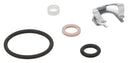


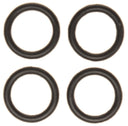

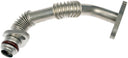
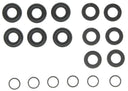
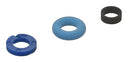
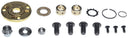


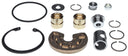
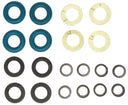
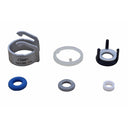


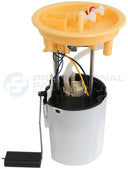

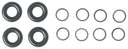



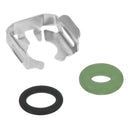
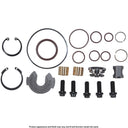


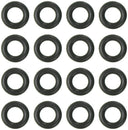
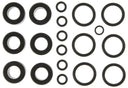


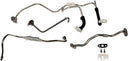
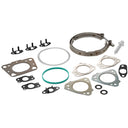
Air and fuel delivery service kits bundle the seals, O-rings, gaskets, and hardware you need to properly rebuild or reinstall fuel injectors, turbochargers, throttle bodies, fuel rails, and related components. Rather than hunting down individual seals by dimension, these kits give you everything required for a complete, leak-free job in one part number. Most fuel injector seal and O-ring kits are needed every 60,000–100,000 miles or any time injectors are pulled for cleaning or replacement - dried, cracked rubber is the leading cause of post-service fuel leaks and rough idle. Turbocharger service and mounting kits typically include new gaskets, oil feed/return seals, and mounting hardware that should be replaced whenever the turbo is removed. When buying, confirm the kit is application-specific rather than a universal assortment - proper O-ring durometer and fuel-resistance rating matter, especially on GDI and diesel systems running higher injection pressures. OEM-equivalent kits from brands like Victor Reinz, Fel-Pro, and Standard Motor Products are reliable choices for most applications.
Signs you need replacement
- Fuel smell at idle or after shutdown - a distinct gasoline odor near the engine bay often points to a weeping injector O-ring or fuel rail seal that has hardened and lost its sealing ability.
- Rough idle, misfire, or lean codes (P0171, P0174) - cracked injector seat seals allow unmetered air into the intake port, leaning out individual cylinders and triggering misfires or fuel trim faults.
- Visible oil or fuel staining around injectors or the fuel rail - wet, oily residue on the injector body or rail ports is a direct sign that upper or lower O-rings are failing.
- Turbo oil leak after service - if you're seeing blue smoke or oil pooling at the turbo after a rebuild, the oil feed/return seals or mounting gasket from the original installation likely need to be replaced with fresh components from a service kit.
- Throttle body hesitation or rough tip-in after cleaning - reusing the original throttle body gasket after removal can result in an air leak that causes unstable idle or hesitation; a repair kit provides the correct replacement gasket.
- Diesel hard start or extended crank time - degraded injector cup seals or pump installation hardware on diesel engines allows combustion pressure to bypass the injector seat, reducing compression and making cold starts difficult.
Frequently asked questions
- How often should fuel injector seals and O-rings be replaced? Replace them any time injectors are removed - even if the rubber looks intact, the compression set from years of heat cycling means a reused O-ring is a likely future leak. On high-mileage engines (75,000+ miles), proactive replacement during tune-ups or fuel system service is common practice and adds minimal cost to the job.
- Are OEM seal kits worth the premium over aftermarket options? For most port-injected engines, quality aftermarket kits from Fel-Pro, Victor Reinz, or Standard Motor Products use the correct Viton or NBR compounds and meet OEM dimensions. On GDI engines and diesel systems operating above 2,000 psi injection pressure, OEM or OEM-equivalent kits are the safer choice - generic kits may use lower-durometer rubber that degrades faster under heat and pressure.
- What else should I replace when doing a fuel injector seal kit job? While injectors are out, it's a good time to replace the injector pintle caps (if applicable), intake manifold gaskets, and fuel filter. On turbocharged engines, pair a turbocharger service kit with fresh oil feed and return line crush washers. Expect to spend $15–$60 on a seal or O-ring kit for a full set of injectors; turbo service kits typically run $25–$120 depending on application.