
Lighting - Instrumentation
| Image | Title | Brand | Part # | Position | Fitment | Price | Availability | Actions | Image | Product | Price |
|---|---|---|---|---|---|---|---|---|---|---|---|
 |
Turn Signal Indicator LightVEMO
|

|
V10-84-0113 | - | - | $30.59 | In Stock | |
Turn Signal Indicator Light
VEMOV10-84-0113
|
$30.59 | |
 |
Turn Signal Indicator LightVEMO
|
|
V10-84-0112 | - | - | $61.90 | In Stock | |
Turn Signal Indicator Light
VEMOV10-84-0112
|
$61.90 | |
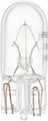 |
Clock LightStandard - Twin Blister Pack
|

|
168B2 | - | - | $9.70 | In Stock | |
Clock Light
Standard - Twin Blister Pack168B2
|
$9.70 | |
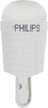 |
Clock LightUltinon LED - White
|
|
168WLED | - | - | $16.97 | In Stock | |
Clock Light
Ultinon LED - White168WLED
|
$16.97 | |
 |
Turn Signal Indicator LightVEMO
|
|
V20-84-0011 | - | - | $67.89 | In Stock | |
Turn Signal Indicator Light
VEMOV20-84-0011
|
$67.89 | |
 |
Turn Signal Indicator LightVEMO
|
|
V10-84-0097 | - | - | $87.34 | In Stock | |
Turn Signal Indicator Light
VEMOV10-84-0097
|
$87.34 | |
 |
Radio Display Light Bulb
|

|
212B-SMD | - | - | $24.15 | In Stock | |
Radio Display Light Bulb
212B-SMD
|
$24.15 | |
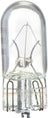 |
Clock LightStandard - Twin Blister Pack
|
|
194B2 | - | - | $6.38 | In Stock | |
Clock Light
Standard - Twin Blister Pack194B2
|
$6.38 | |
 |
Automatic Transmission Indicator Light BulbHella
|

|
2821SB | - | - | $9.25 | In Stock | |
Automatic Transmission Indicator Light Bulb
Hella2821SB
|
$9.25 | |
 |
Automatic Transmission Indicator Light Bulb
|
|
194W-SMD | - | - | $20.87 | In Stock | |
Automatic Transmission Indicator Light Bulb
194W-SMD
|
$20.87 | |
 |
Automatic Transmission Indicator Light Bulb
|
|
194W-HP | - | - | $24.49 | In Stock | |
Automatic Transmission Indicator Light Bulb
194W-HP
|
$24.49 | |
 |
Automatic Transmission Indicator Light Bulb
|
|
194R-HP | - | - | $23.38 | In Stock | |
Automatic Transmission Indicator Light Bulb
194R-HP
|
$23.38 | |
 |
Automatic Transmission Indicator Light Bulb
|
|
194G-HP | - | - | $20.87 | In Stock | |
Automatic Transmission Indicator Light Bulb
194G-HP
|
$20.87 | |
 |
Automatic Transmission Indicator Light Bulb
|
|
194B-SMD | - | - | $24.32 | In Stock | |
Automatic Transmission Indicator Light Bulb
194B-SMD
|
$24.32 | |
 |
Automatic Transmission Indicator Light Bulb
|
|
194B-HP | - | - | $23.84 | In Stock | |
Automatic Transmission Indicator Light Bulb
194B-HP
|
$23.84 | |
 |
Automatic Transmission Indicator Light Bulb
|
|
194A-HP | - | - | $23.65 | In Stock | |
Automatic Transmission Indicator Light Bulb
194A-HP
|
$23.65 | |
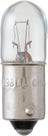 |
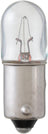
Clock LightLongerLife - Twin Blister Pack
|
|
1893LLB2 | - | - | $9.62 | In Stock | |
Clock Light
LongerLife - Twin Blister Pack1893LLB2
|
$9.62 | |
 |
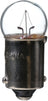
Clock LightLongerLife - Twin Blister Pack
|
|
1816LLB2 | - | - | $9.09 | In Stock | |
Clock Light
LongerLife - Twin Blister Pack1816LLB2
|
$9.09 | |
 |
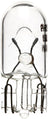
Clock LightLongerLife - Twin Blister Pack
|
|
1445LLB2 | - | - | $10.00 | In Stock | |
Clock Light
LongerLife - Twin Blister Pack1445LLB2
|
$10.00 | |
 |
Clock LightLongerLife - Twin Blister Pack
|
|
158LLB2 | - | - | $5.15 | In Stock | |
Clock Light
LongerLife - Twin Blister Pack158LLB2
|
$5.15 | |
 |
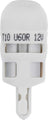
Instrument Panel Light BulbStandard - Twin Blister Pack
|
|
PC194B2 | - | - | $5.47 | In Stock | |
Instrument Panel Light Bulb
Standard - Twin Blister PackPC194B2
|
$5.47 | |
 |
Clock LightUltinon LED - Red
|
|
194RLED | - | - | $18.12 | In Stock | |
Clock Light
Ultinon LED - Red194RLED
|
$18.12 | |
 |
Clock LightLongerLife - Twin Blister Pack
|
|
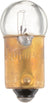
57LLB2 | - | - | $9.61 | In Stock | |
Clock Light
LongerLife - Twin Blister Pack57LLB2
|
$9.61 | |
 |
Clock LightStandard - Twin Blister Pack
|
|
53B2 | - | - | $10.03 | In Stock | |
Clock Light
Standard - Twin Blister Pack53B2
|
$10.03 | |
 |
Clock LightStandard - Twin Blister Pack
|
|
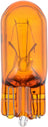
1895B2 | - | - | $8.96 | In Stock | |
Clock Light
Standard - Twin Blister Pack1895B2
|
$8.96 | |
 |
Clock LightStandard - Twin Blister Pack
|
|
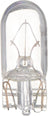
194NAB2 | - | - | $10.46 | In Stock | |
Clock Light
Standard - Twin Blister Pack194NAB2
|
$10.46 | |
 |
Clock LightStandard - Multiple Commercial Pack
|
|
168CP | - | - | $9.01 | In Stock | |
Clock Light
Standard - Multiple Commercial Pack168CP
|
$9.01 | |
 |
Instrument Panel Light Bulb
|
|
639-042 | - | - | $18.60 | In Stock | |
Instrument Panel Light Bulb
639-042
|
$18.60 | |
 |
Instrument Panel Light Bulb
|

|
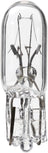
65811374495 | - | - | $21.16 | In Stock | |
Instrument Panel Light Bulb
65811374495
|
$21.16 | |
 |
Clock LightStandard - Twin Blister Pack
|
|
74B2 | - | - | $5.94 | In Stock | |
Clock Light
Standard - Twin Blister Pack74B2
|
$5.94 | |
 |
Automatic Transmission Indicator Light Bulb
|
|
639-036 | - | - | $46.38 | In Stock | |
Automatic Transmission Indicator Light Bulb
639-036
|
$46.38 | |
| — |
Clock LightUltinon LED - Amber
|
|
194ALED | - | - | $20.53 | In Stock |
Clock Light
Ultinon LED - Amber194ALED
|
$20.53 | ||
 |
Instrument Panel Light Bulb
|
|
639-046 | - | - | $14.67 | In Stock | |
Instrument Panel Light Bulb
639-046
|
$14.67 | |
 |
Instrument Panel Light BulbLongerLife - Twin Blister Pack
|
|
24LLB2 | - | - | $10.52 | In Stock | |
Instrument Panel Light Bulb
LongerLife - Twin Blister Pack24LLB2
|
$10.52 | |
 |
Instrument Panel Light BulbStandard - Twin Blister Pack
|
|
12256B2 | - | - | $9.79 | In Stock | |
Instrument Panel Light Bulb
Standard - Twin Blister Pack12256B2
|
$9.79 | |
 |
Clock LightLongerLife - Twin Blister Pack
|
|
74LLB2 | - | - | $9.92 | In Stock | |
Clock Light
LongerLife - Twin Blister Pack74LLB2
|
$9.92 | |
 |
Instrument Panel Light Bulb
|
|
639-008 | - | - | $19.06 | In Stock | |
Instrument Panel Light Bulb
639-008
|
$19.06 | |
 |
Instrument Panel Light Bulb
|
|
639-005 | - | - | $26.79 | In Stock | |
Instrument Panel Light Bulb
639-005
|
$26.79 | |
 |
Automatic Transmission Indicator Light Bulb
|
|
639-048 | - | - | $19.97 | In Stock | |
Automatic Transmission Indicator Light Bulb
639-048
|
$19.97 | |
 |
Instrument Panel Light BulbLongerLife - Twin Blister Pack
|
|
105LLB2 | - | - | $6.30 | In Stock | |
Instrument Panel Light Bulb
LongerLife - Twin Blister Pack105LLB2
|
$6.30 | |
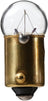 |
Clock LightStandard - Twin Blister Pack
|
|
1445B2 | - | - | $4.50 | In Stock | |
Clock Light
Standard - Twin Blister Pack1445B2
|
$4.50 | |
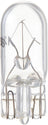 |
Instrument Panel Light BulbLongerLife - Twin Blister Pack
|
|
12256LLB2 | - | - | $6.77 | In Stock | |
Instrument Panel Light Bulb
LongerLife - Twin Blister Pack12256LLB2
|
$6.77 | |
 |
Instrument Panel Light Bulb
|
|
639-035 | - | - | $47.47 | In Stock | |
Instrument Panel Light Bulb
639-035
|
$47.47 | |
 |
Instrument Panel Light Bulb
|
|
639-043 | - | - | $14.64 | In Stock | |
Instrument Panel Light Bulb
639-043
|
$14.64 | |
 |
Instrument Panel Light Bulb
|
|
639-002 | - | - | $32.34 | In Stock | |
Instrument Panel Light Bulb
639-002
|
$32.34 | |
 |
Automatic Transmission Indicator Light BulbHella
|
|
2821TB | - | - | $9.56 | In Stock | |
Automatic Transmission Indicator Light Bulb
Hella2821TB
|
$9.56 | |
 |
Instrument Panel Light Bulb
|
|
639-010 | - | - | $35.51 | In Stock | |
Instrument Panel Light Bulb
639-010
|
$35.51 | |
 |
Instrument Panel Light Bulb
|
|
639-009 | - | - | $21.93 | In Stock | |
Instrument Panel Light Bulb
639-009
|
$21.93 |
More Information
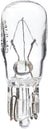
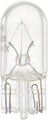
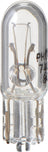
Instrumentation lighting covers the small but critical bulbs and indicators that illuminate your instrument cluster, clock, gear selector, and turn signal indicators — the lights that let you read your gauges and warning displays after dark. These bulbs are typically T5, T10, or festoon-style incandescents rated at 12V/1.4W–3W, though many newer vehicles use LEDs. Failures are common on high-mileage vehicles, especially after 80,000–150,000 miles of heat cycling behind the dash. When shopping, confirm the bulb base type and wattage against your factory service manual — an incorrect wattage can cause dim output, flickering, or in rare cases, damage to the cluster socket. OEM replacements guarantee fitment and color temperature match, while quality aftermarket bulbs from brands like Philips or Sylvania offer comparable performance, often with longer-lasting LED upgrade options that eliminate future replacements.
Signs you need replacement
- Dark or dim sections of the instrument cluster at night. If your speedometer, tachometer, or fuel gauge area is unlit or noticeably dimmer than surrounding gauges, one or more panel bulbs have likely burned out.
- Clock display is backlit unevenly or completely unlit. Clock lights are a separate circuit from the main cluster on many vehicles and fail independently — a dark clock face with a functioning display panel points specifically to the clock light bulb.
- Gear selector position (PRNDL) indicator is missing or partially dark. The automatic transmission indicator bulb illuminates the gear position window on the center console or column — failure makes it impossible to confirm selected gear in low light.
- Turn signal indicator on the dash doesn't light up when signaling. If the external turn signals still work but the in-dash arrow indicator is dark, the indicator bulb itself has failed rather than the flasher or stalk switch.
- Flickering or intermittent cluster lighting. Bulbs near end of life often flicker before failing completely, especially after the vehicle warms up — this is thermal failure of the filament and replacement is imminent.
Frequently asked questions
- Do instrument panel bulbs have a set replacement interval? There's no fixed mileage interval — incandescent cluster bulbs typically last 80,000–150,000 miles but fail unpredictably from heat and vibration. If you're already pulling the cluster for another repair, replacing all bulbs at once with LEDs is worthwhile preventive maintenance and avoids a repeat teardown.
- Are LED upgrade bulbs a direct swap for OEM incandescent cluster bulbs? Most T5 and T10 LED replacements are plug-and-play, but verify polarity before final installation — LEDs are polarity-sensitive and won't illuminate if installed backwards. Also match the color temperature (typically 3000K–6000K) to your existing cluster color to avoid a mismatched look across the panel.
- How difficult is it to replace instrument cluster bulbs, and what does it cost? DIY difficulty ranges from moderate to challenging depending on the vehicle — some clusters pull out with two screws, others require removing the steering column trim and multiple panels. Bulbs themselves cost $1–$8 each. Shop labor for a full cluster pull typically runs $75–$150, making this a strong candidate for DIY if you're comfortable with trim removal.