More Information
Driveline and axle hardware keeps the rotating assembly intact — spindle nuts clamp wheel bearings to spec, retaining rings and C-clips lock axle shafts in place, and crush sleeves set pinion bearing preload during differential rebuilds. These parts are small, but a loose spindle nut or a missing bearing retaining ring can cause bearing failure, axle walkout, or complete wheel separation. Most fasteners only need attention during a related repair — wheel bearing replacement, differential rebuild, or CV axle swap — but they should always be replaced rather than reused. Torque specs are critical here; spindle and axle nuts typically range from 100–250 ft-lbs depending on application. When buying, prioritize OEM-spec hardware for safety-critical fasteners like spindle nuts and axle nuts. Aftermarket is generally fine for differential cover plugs, dust caps, and repair sleeves. Always verify part numbers by year, make, model, and drivetrain — front-wheel-drive, rear-wheel-drive, and 4WD applications often use completely different hardware.
Signs you need replacement
- Humming or growling noise that changes with vehicle speed — a loose or improperly torqued spindle nut or axle nut allows wheel bearing play, which accelerates wear and produces a characteristic drone that typically worsens during turns.
- Lateral wheel wobble or axle shaft movement — if a drive axle shaft C-clip, retaining ring, or shaft retainer has failed, the axle can migrate outward in the differential housing, causing slop or complete disengagement.
- Differential whine or gear noise after a fluid change or rebuild — incorrect pinion bearing preload, often caused by reusing an old crush sleeve instead of installing a new one, produces a high-pitched whine under acceleration or deceleration.
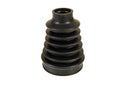
- Grease visible on the inside of a wheel or around a CV axle — a torn CV joint boot or drive shaft boot is allowing lubricant to escape and contamination to enter; the joint itself may still be serviceable if caught early.
- Differential fluid leaking from the pinion seal area — a worn sealing surface on the pinion shaft often requires a pinion repair sleeve to restore the seal contact area, rather than replacing the entire housing or yoke.
- Wheel bearing replacement in progress — bearing retaining rings, spindle nut washers, and spindle nut retainers are single-use components on many platforms and must be replaced any time the hub assembly is disassembled.
Frequently asked questions
- Do spindle nuts and axle nuts need to be replaced every time, or can they be reused? On most applications, prevailing-torque spindle nuts and axle nuts are designed for single use — the locking feature (staked collar, nylon insert, or deformed thread) is compromised once removed. Reusing them risks undertorque and bearing looseness. Always check your OEM service manual; some flanged axle nuts are rated for one reuse with proper inspection.
- Is aftermarket hardware reliable for differential rebuilds, or should I stick with OEM crush sleeves and pinion repair sleeves? For crush sleeves, aftermarket is widely acceptable as long as the part is application-specific — incorrect length or hardness will throw off pinion preload. Pinion repair sleeves from brands like Speedi-Sleeve (SKF) are industry-standard and often preferred over OEM because of consistent surface finish. Avoid generic unbranded sleeves for repair sleeve applications.
- What else should I replace when I'm already replacing wheel bearing hardware? If you're pulling the hub for a bearing job, replace the spindle nut, spindle nut washer, and retainer as a set — combined cost is typically $10–$30 and prevents a comeback. On older vehicles with cup-and-cone bearings, inspect the dust cap and replace it if it's dented or out-of-round. A new seal is also cheap insurance at this point.