More Information
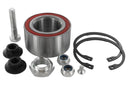
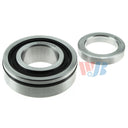
Wheel bearings allow your hub and rotor assembly to spin freely while supporting the full weight of the vehicle — and when they wear out, handling, tire wear, and safety all suffer. Most bearings last 85,000–100,000 miles under normal conditions, but fail earlier with water contamination, aggressive driving, or impact damage from potholes. This catalog covers individual wheel bearings, bearing and race sets for serviceable spindle-style applications, pressed-in hub assemblies, and hub dust shields. When buying, confirm whether your vehicle uses a serviceable tapered roller bearing (common on older trucks and rear-wheel-drive cars) or a sealed hub assembly — they're not interchangeable. For serviceable applications, always replace the bearing and race as a matched set. OEM-equivalent bearings from brands like Timken, SKF, and Moog meet or exceed factory specifications and are generally worth the premium over no-name alternatives.
Signs you need replacement
- Humming, growling, or grinding noise that changes with vehicle speed — this is the most common symptom. The noise often shifts or disappears when you change lanes because lateral load transfers weight off the worn bearing.
- Rumbling or droning that gets louder when turning in one direction — loading the outside bearing during a turn amplifies wear noise and points to which corner is failing.
- Steering wheel vibration or looseness at highway speeds — excessive bearing play allows the hub to wobble, which you'll feel through the steering and may cause uneven tire wear patterns.
- ABS warning light with no obvious brake fault — on hub assemblies with integrated wheel speed sensors, bearing wear can cause the tone ring to run out of position, triggering false ABS or traction control faults.
- Visible grease leakage around the hub or backing plate — failed inner or outer seals on serviceable bearings allow grease to escape and contamination to enter, accelerating wear and requiring immediate service.
- Noticeable wheel wobble or looseness when the vehicle is jacked up — grab the tire at 12 and 6 o'clock and try to rock it; any detectable play in a sealed hub assembly indicates the bearing is due for replacement.
Frequently asked questions
- How often do wheel bearings need to be replaced, and is there a set interval? Sealed hub assemblies have no service interval — they're replaced when worn, typically between 85,000 and 100,000 miles. Serviceable tapered roller bearings (common on older trucks and trailers) should be cleaned, inspected, and repacked with fresh grease every 25,000–30,000 miles or during brake service, whichever comes first.
- Is there a meaningful difference between OEM and aftermarket wheel bearings? For sealed hub assemblies, quality varies significantly. Timken, SKF, and Moog are the most widely trusted aftermarket brands — their tolerances, load ratings, and integrated sensor accuracy are on par with OEM. Budget bearings from unknown importers often fail within 20,000–30,000 miles and can compromise ABS function on sensor-equipped hubs.
- Should I replace both sides when one wheel bearing fails, and what else should I do at the same time? Bearings on the same axle typically see identical mileage and stress, so replacing both sides is common practice and saves labor. At the same time, inspect or replace the hub seal, check the spindle or knuckle for scoring, and verify the ABS tone ring is undamaged. On serviceable setups, always replace the race with the bearing.