
Select your vehicle
Electrical Connectors


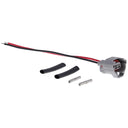


Air and fuel delivery electrical connectors are the wiring interface points between your vehicle's ECU and the components that meter, deliver, and control fuel - throttle bodies, injectors, fuel pumps, pressure switches, sensors, and solenoids. They fail in predictable ways: heat cycling and vibration crack the plastic housing, corrosion degrades the terminal contacts, and fuel vapor exposure weakens the locking tabs that hold the connector seated. Most connectors don't wear out on a schedule, but they should be inspected any time you're servicing the component they attach to. When buying replacements, match the terminal count, wire gauge rating, and connector body style exactly - a 3-pin fuel injector connector from one generation may not seat correctly in another. OEM-spec connectors with pre-installed terminals and weatherproof seals are worth the small premium over bare-bones aftermarket versions, especially for fuel pump and injector applications where a loose connection causes hard-to-diagnose misfires and stalling.
Signs you need replacement
- Rough idle, misfires, or lean/rich codes (P0171, P0172, P030x) with no obvious mechanical cause - a corroded or intermittently seated fuel injector or throttle body connector can disrupt signal and fuel delivery without throwing a hard fault every time.
- Engine stalls or hesitates under load, particularly on hard acceleration, which can point to a failing fuel pump connector losing contact when the harness flexes.
- Throttle response feels erratic or the vehicle enters limp mode - electronic throttle body actuator connectors that are cracked or backed-out terminals are a common cause of reduced-power faults on drive-by-wire systems.
- Visible corrosion, green oxidation, or melted plastic on the connector body found during an inspection - fuel and heat exposure accelerates terminal degradation faster than most other underhood connectors.
- Fuel trim or sensor data that jumps erratically on a live scan even when the sensor itself tests good - wiggle-testing the harness connector while watching data is a reliable way to isolate a failing TPS or air charge temperature sensor connector.
- Fuel pump runs intermittently or won't prime after the key cycles, especially on high-mileage vehicles - the fuel pump connector and sending unit connector are frequent failure points before the pump itself fails.
Frequently asked questions
- Do these connectors need to be replaced on a set interval? No scheduled replacement interval applies - these are inspect-on-access parts. Replace them when you see cracked housings, corroded or pushed-back terminals, or broken locking tabs. High-mileage vehicles (100,000+ miles) with original connectors near the exhaust or fuel tank are worth proactive inspection during any related service.
- Are OEM connectors worth the extra cost over aftermarket? For fuel injector, fuel pump, and throttle body applications, OEM or OEM-equivalent connectors with factory-spec nylon housings and pre-crimped terminals are the better choice - fitment, locking tab integrity, and heat resistance are tighter. Generic aftermarket connectors are acceptable for lower-stakes sensors like fuel level or air charge temperature.
- What's a typical cost, and should I replace anything else at the same time? Individual connectors range from $8–$40 depending on terminal count and application; pigtail assemblies with 6–10 inches of wire run $15–$55. If you're replacing a fuel injector or throttle body connector, replace all injector connectors in the set for consistency. Always inspect the mating terminals on the component side for corrosion before buttoning up.